

CBDa vs CBD: What's the Difference and Why It Matters
Most people assume CBDa and CBD are interchangeable, two names for the same thing. They are not. CBDa (cannabidiolic acid) is the compound that actually exists in living hemp plants. CBD only appears after heat destroys CBDa’s molecular structure. That distinction shapes everything from how the compound absorbs in your body to whether it crystallizes in the bottle.
Understanding the difference between CBDa and CBD is not just academic. It determines the quality, bioavailability, and effectiveness of the hemp product you are putting into your body.
What Is CBDa?
CBDa is the raw, acidic precursor to CBD found naturally in living hemp plants. When a hemp plant grows, it does not produce CBD. It produces CBDa. Every cannabinoid in the living plant exists in its acidic form (THCa, CBDa, CBGa) with a carboxyl group (-COOH) attached to its molecular structure.
CBD doesn’t exist in living cannabis. It is a byproduct of heat. When CBDa is exposed to sustained temperatures through a process called decarboxylation, it loses its carboxyl group and converts into CBD. This happens during smoking, vaping, cooking, or industrial distillation.
The implication is straightforward: any product labeled “CBD” that went through heat-based extraction or distillation contains the converted, decarboxylated form, not the compound the plant actually produced. To preserve CBDa, you have to avoid heat entirely.
CBDa vs CBD: The Key Differences
While CBDa and CBD share a similar molecular backbone, the presence or absence of the carboxyl group changes their behavior in significant ways.
Chemical structure. CBDa carries a carboxyl group (-COOH) that CBD lacks. This additional functional group alters how the molecule interacts with receptors, enzymes, and cell membranes throughout the body. It is not a minor modification. It changes the compound’s pharmacology.
Physical state. This is one of the most visible differences. CBDa stays liquid and oily in formulation. CBD distillate, by contrast, crystallizes once concentration exceeds roughly 60%. The carboxyl group on CBDa disrupts crystal lattice formation, preventing the solidification that plagues CBD concentrates. If your “CBD oil” has ever turned cloudy, gritty, or semi-solid in the bottle, you are looking at CBD crystallization, something that does not happen with CBDa-rich extracts.
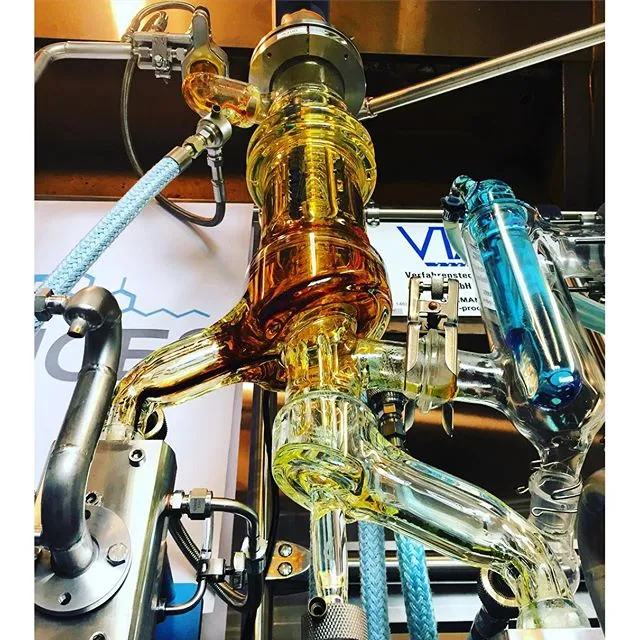
Processing. CBD requires heat and distillation. CBDa requires cold processing to survive extraction intact. These are fundamentally different manufacturing philosophies. One prioritizes yield and standardization. The other prioritizes preserving what the plant produced.
Bioavailability. This is where the science gets compelling. Multiple peer-reviewed studies show that CBDa absorbs dramatically better than CBD when taken orally. The difference is not marginal. It is measured in orders of magnitude.
The Science: CBDa Bioavailability
CBD’s reputation has a dirty secret: it has terrible oral bioavailability. Studies consistently place CBD’s oral absorption at just 13-19%. That means more than 80% of the CBD you swallow never reaches your bloodstream. It is metabolized by the liver or expelled before it can do anything.
CBDa tells a different story.
A 2025 study published in the International Journal of Pharmaceutics found that CBDa plasma concentrations were approximately 100 times higher than CBD in animal models given equivalent doses. One hundred times. That is not a subtle improvement. It is a fundamentally different pharmacokinetic profile.
Research published in Scientific Reports (2021) demonstrated that CBDa absorption was 14 times higher when delivered in a full-spectrum extract compared to an isolated form. The mechanism is noteworthy: other cannabinoids in the extract inhibit the BCRP efflux pump, a transporter protein that actively pumps CBDa back out of intestinal cells. When companion cannabinoids block that pump, CBDa stays in the body instead of being expelled.
This finding provides a pharmacokinetic basis for the entourage effect, the widely discussed but often vaguely defined idea that cannabinoids work better together. In this case, the synergy is measurable. Full-spectrum CBDa absorbs 14 times better than CBDa alone because the surrounding compounds physically prevent cellular efflux.
Why Big Pharma Took Notice
If CBDa were scientifically irrelevant, pharmaceutical companies would not have invested billions in it.
GW Pharmaceuticals, the company behind Epidiolex (the first FDA-approved cannabinoid drug), recognized CBDa’s therapeutic superiority over CBD. But they faced the same problem every manufacturer faces: CBDa is unstable under conventional processing conditions. Heat destroys it.
Their solution was to develop HU-580, a synthetic stabilized version of CBDa designed to survive standard pharmaceutical manufacturing. GW was subsequently acquired by Jazz Pharmaceuticals for $7.2 billion, one of the largest deals in pharmaceutical history.
GW/Jazz holds US Patent 8,034,843, covering the use of CBDa for the treatment of nausea and vomiting. The patent itself is a statement: a company that ultimately commanded a $7.2 billion acquisition price invested significant R&D into stabilizing a compound that nature already produces, because they could not preserve it through conventional processing.
The pharmaceutical industry’s interest in CBDa validates what the research shows. CBDa is not a lesser version of CBD waiting to be activated. It is a distinct, potent compound in its own right.
CBDa’s Unique Therapeutic Properties
Published research has identified several areas where CBDa demonstrates notable activity. These findings come from peer-reviewed studies and should be understood as research outcomes, not health claims.
Anti-Nausea
Studies published in the British Journal of Pharmacology (2013) found that CBDa required a dose approximately 1,000 times lower than CBD to produce anti-nausea effects in animal models. CBDa was shown to be roughly 100 times more potent than CBD at activating 5-HT1A serotonin receptors, a key pathway involved in nausea regulation.
Perhaps most significantly, research suggests CBDa is effective against anticipatory nausea, the type that occurs before a triggering event, such as before a chemotherapy session. There is currently no approved pharmaceutical treatment for anticipatory nausea, making CBDa’s activity in this area particularly noteworthy.
Anti-Inflammatory
Research has shown that CBDa acts as a selective COX-2 inhibitor with an IC50 of approximately 2 micromolar and roughly 9 times greater selectivity for COX-2 over COX-1. This selectivity profile is functionally similar to how drugs like ibuprofen and celecoxib work, reducing inflammation while minimizing gastrointestinal side effects associated with non-selective COX inhibition.
The carboxyl group is essential to this mechanism. When CBDa is decarboxylated to CBD, the selective COX-2 inhibition disappears. The anti-inflammatory pathway is structurally dependent on the molecular feature that heat removes.
Anticonvulsant
A 2019 study in the Journal of Natural Products found that CBDa was 3 to 10 times more potent than CBD in mouse models of Dravet syndrome, a severe form of epilepsy. This is particularly relevant given that CBD-based Epidiolex is already FDA-approved for Dravet syndrome, and its precursor compound appears to be significantly more effective at lower doses.
Cold Processing: How to Keep CBDa Alive
Conventional hemp extraction uses heat. Supercritical CO2 extraction, ethanol distillation, and winterization all involve temperatures that force decarboxylation. CBDa converts to CBD, and the processor calls it a feature rather than a loss.
That conversion is not clean. Research indicates that up to 18% of CBDa is lost during decarboxylation as degradation byproducts, not converted to CBD, but destroyed entirely. Terpenes, the aromatic compounds responsible for strain-specific flavors and effects, are volatilized and lost during heating as well.
Cold processing at -115°F takes the opposite approach. By keeping the material at -115°F through the entire extraction process, the oil never reaches the temperatures where decarboxylation occurs. The result is CBDa preserved in its native molecular form, exactly as the plant produced it.
This is how Alive & Well processes its CBD line. Every “CBD” product we sell is actually CBDa-rich because we never apply the heat that would convert it. The result is an extract that stays liquid, retains its full terpene profile, and delivers CBDa’s superior bioavailability. When you see “CBD” on our label and then check the COA, you will find CBDa listed as the dominant cannabinoid. That is by design.
How to Know If Your CBD Is Actually CBDa
The only way to verify what is in your hemp product is to read the COA (Certificate of Analysis), the third-party lab report that every reputable brand should provide.
Here is what to look for:
- Find the cannabinoid profile. Look for “CBDa” as a separate line item, distinct from “CBD.” These are tested and reported as different compounds.
- If the COA only shows “CBD” with no CBDa detected, the product was heated or distilled. The CBDa was converted during processing.
- If CBDa is listed as the dominant cannabinoid, with CBD present only in trace amounts, the extract was cold-processed and the native compound was preserved.
Not sure how to interpret a lab report? Read our guide on how to read a COA or browse our lab reports directly to see what a CBDa-dominant profile looks like.
The Bottom Line
CBDa is not just “raw CBD.” It is a distinct compound with a different molecular structure, different physical properties, different bioavailability, and different therapeutic potential. The published science is consistent: CBDa outperforms CBD in absorption, anti-nausea potency, anti-inflammatory selectivity, and anticonvulsant activity.
Cold processing is the only way to preserve CBDa. Heat destroys it, and with it, the carboxyl group responsible for CBDa’s unique mechanisms of action. The pharmaceutical industry recognized this and spent billions trying to stabilize the compound synthetically. The simpler answer is to never apply the heat in the first place.
This is why Alive & Well’s CBD products stay liquid, taste like the plant, and deliver the full spectrum of what hemp has to offer. We process at -115°F because the science says the raw compound is better, and because the plant already did the hard work. We just keep it intact.
Explore our CBDa-rich CBD vapes or our Fire & Ice CBD topical and see the difference cold processing makes.
These statements have not been evaluated by the FDA. This product is not intended to diagnose, treat, cure, or prevent any disease. The research cited reflects published scientific studies and does not constitute medical advice.